
I love a good funky curve-ball tea. You’ll hear me describe a lot of things as ‘funky’ – but Mei Leaf’s Koji Plum really fits the bill. This tea is a mix of cultivars of green tea, fermented with Koji, and then steamed.
I tried it for the first time back in January, and initially I wasn’t quite convinced. The aroma was very floral, fruity, and sweet – plum, hibiscus, raspberry, apricot – but the flavour profile leaned more into roasted and herbaceous vibes – eucalyptus, nettle, barley. I found the flavour shockingly light for its thicker texture, and rather than the lingering sugar sweetness I’d been expecting from Don’s description, I was left with a more metallic twang at the end. I was a bit taken aback – the texture and flavour didn’t feel balanced, and I wasn’t getting the sweetness I’d come in expecting.
So far, so funky – and then you leave the brew out for a little while and the liquor turns pink! The longer you leave a cup sitting out, the deeper rose-pink the liquor becomes. It’s really quite incredible.
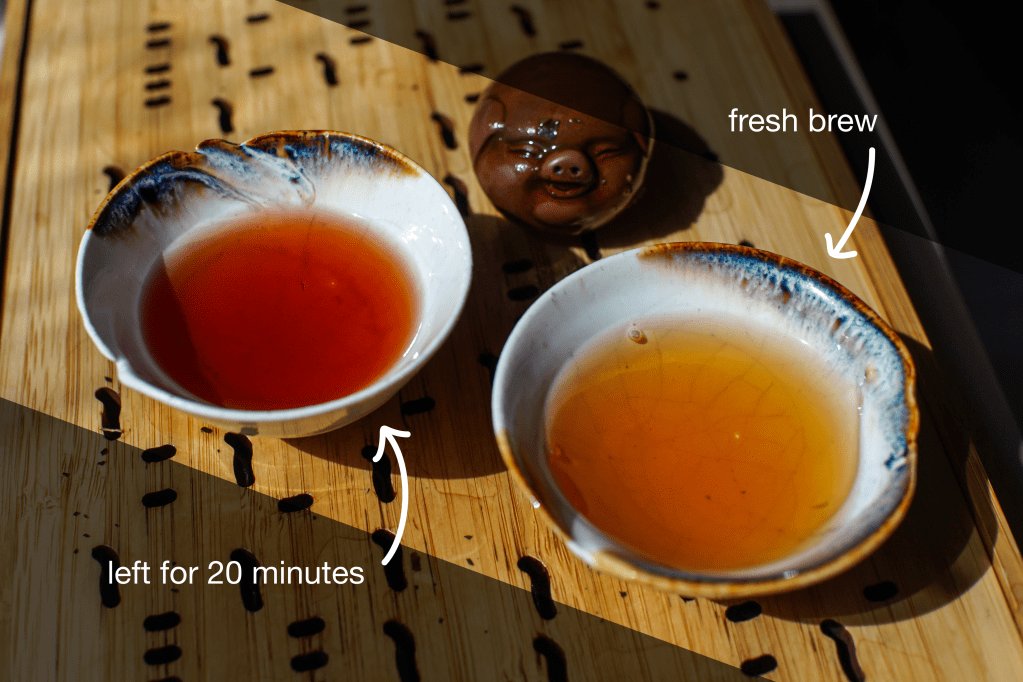
I was quite charmed by the colour change, but a bit uncertain of everything else. So Koji Plum sat on the shelf for a few months, one of my funky curiosities, watching me brew everything else and probably feeling a bit neglected. I knew it needed another go, but it just never felt like the right moment…
Until a few weeks ago, when my friend Kartini and I put our heads together on a project we’d both been considering separately. Look out for more on this soon, but of course for our brainstorming session we needed some good tea. Kartini particularly loves Japanese greens, so I thought I’d surprise her with something adjacent but a bit off-kilter – it was Koji Plum’s time to shine.
I warned Kartini that it was a bit too intense sometimes, and then – it wasn’t. The jammy plum and hibiscus notes popped this time, but the brew wasn’t as overpowering, the fruitiness not cloying, the texture just the right side of sticky. Still funky af, but such a good kind of funky.
What changed? I brewed with less leaf this time, so maybe I’d just gone in a bit intense on my first try. But I came in with different expectations this time, too. Maybe because I was brewing for Kartini, who hadn’t tried the tea before, it was easier to let go of my own expectations and assumptions about what this tea would be. Hearing Kartini’s impressions, I identified things I hadn’t noticed before, and I remained open and curious to whatever emerged in the session in a way I hadn’t managed to that first time.
Clay vs porcelain
With my impression of this tea thoroughly reconfigured, I thought I’d experiment with brewing it in different vessels too. I brewed side-by-side in a porcelain gaiwan and clay, the xi shi yixing pot I usually reserve for shou puers.

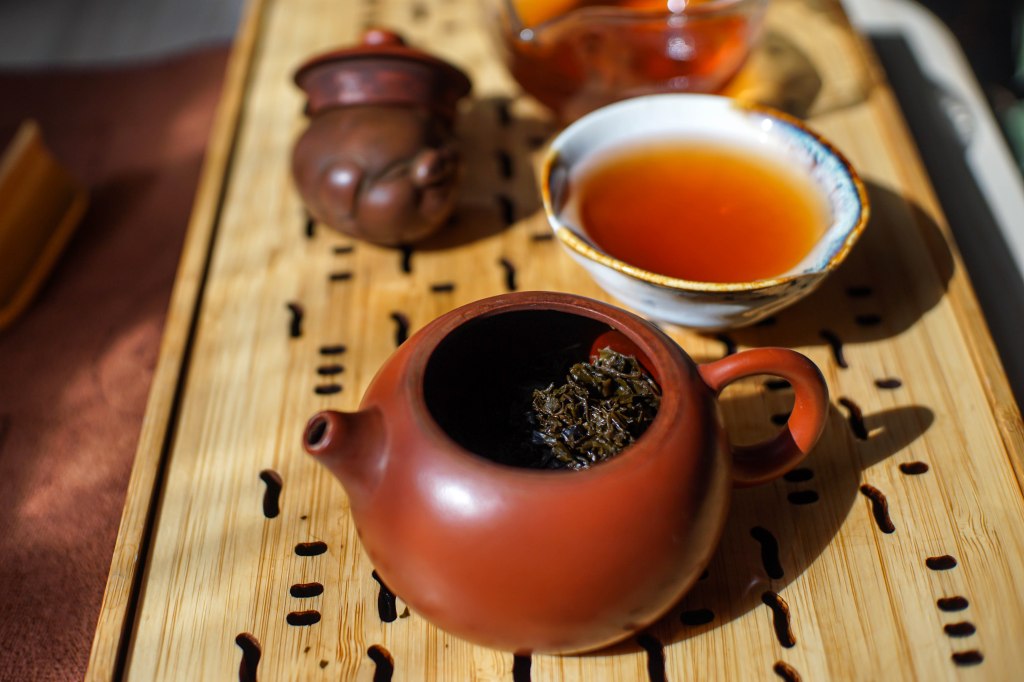

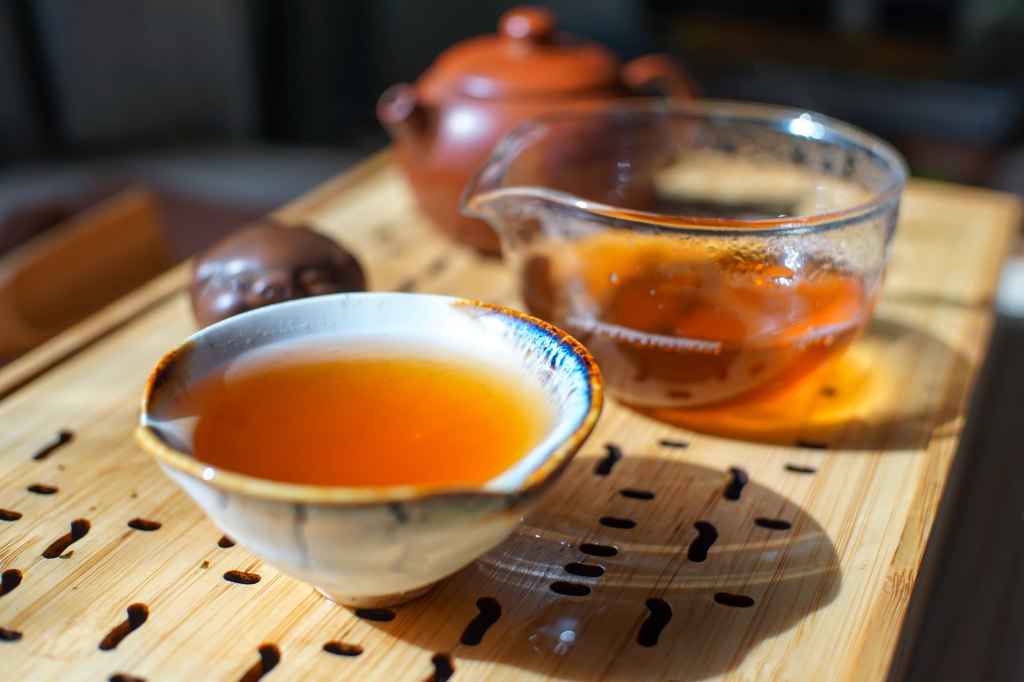
In the clay, the fresh fruity notes really kicked up a notch. I felt like I could taste each individual note very clearly – the barley/roasted notes came out much more clearly than in porcelain, and this kept the hibiscus and plum from dominating. The balance of flavours was excellent, with a very smooth full-bodied mouthfeel.
In porcelain, the minerality was much stronger, with almost a metallic tang to it. The fruits came out on top this time as well, but in a slightly domineering way – the tea is much more top-heavy and less full-bodied in porcelain. All the notes I’d previously identified blended together a bit more, and it was harder to pick out the individual flavours as I could with the clay. This one felt much more like a refreshing summer drink than the clay brew.
Cold brew
As always a cold brew experiment is compulsory! I wasn’t quite sure what to expect with this one – this tea is an exercise in setting aside your flavour expectations – but I did expect fabulous colour, and that definitely delivered. Look at that glow!

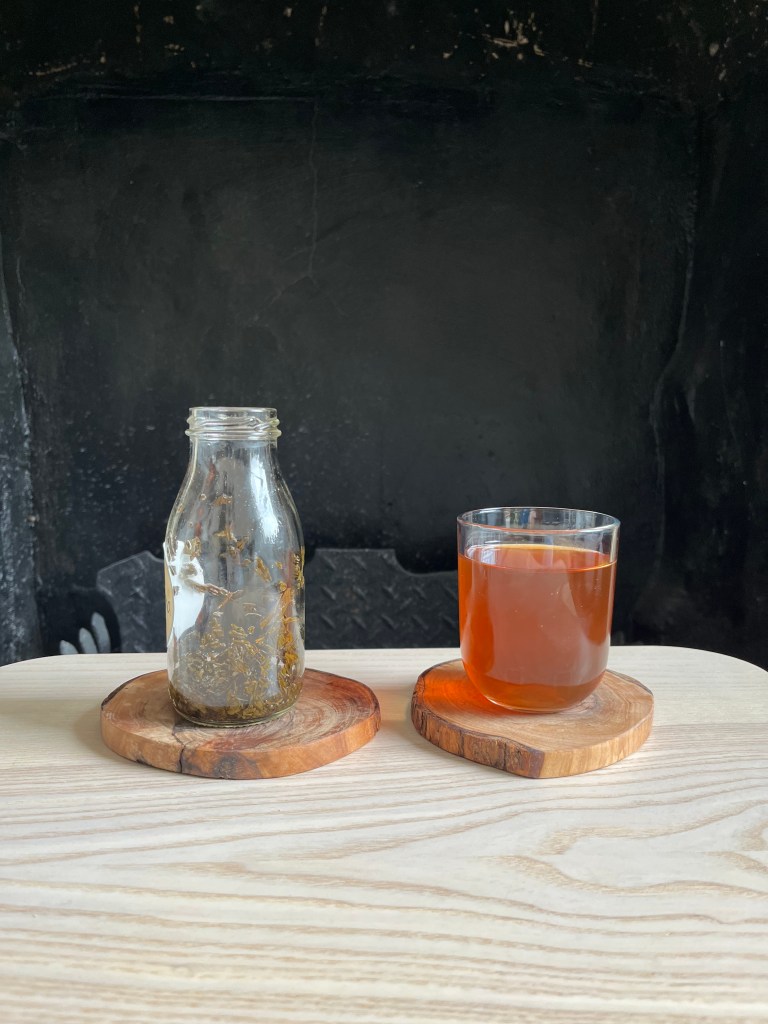
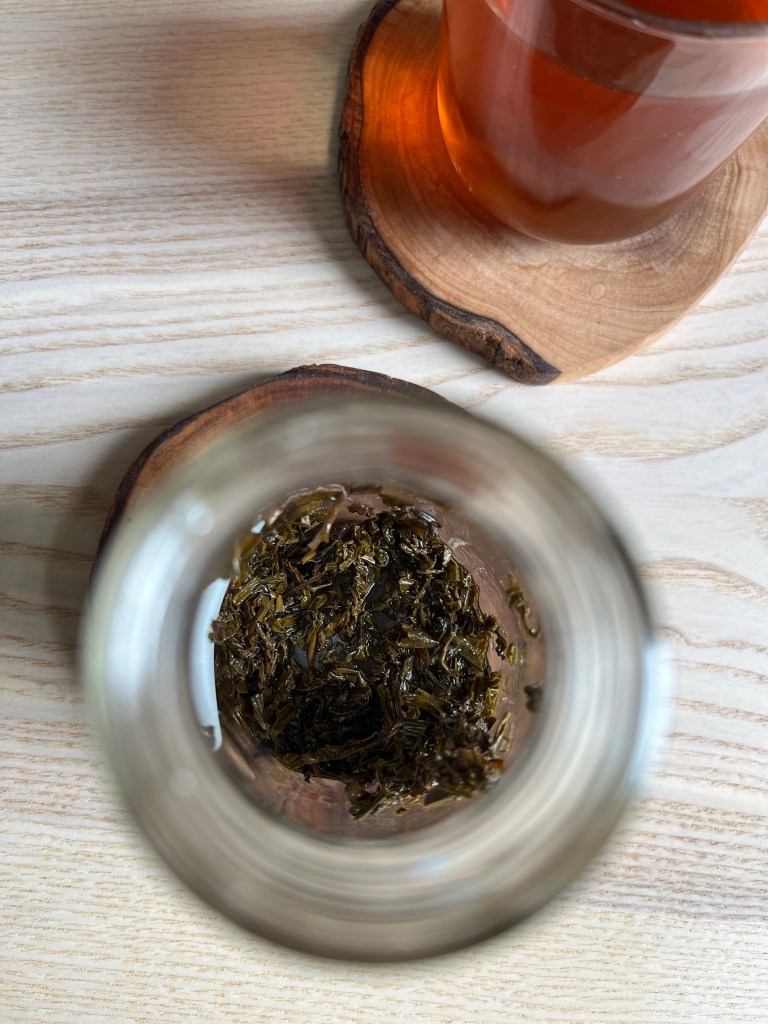
The cold brew was really strong on the florals, particularly hibiscus. Like in porcelain, it was heavy on the minerality and almost a bit metallic – far less sweet than I thought it might be, and the plum didn’t come through as much either. I did get some nuttiness, in a hazelnut shell kind of way, more so than the roasted/toasted notes.
This cold brew was quite light and didn’t have the body of any of the hot brews, but the texture was very thick, quenching, and refreshing. It was an interesting blend of flavour and texture really – with the hibiscus flavour so dominant, the thickness of the liquor felt quite surprising, but it did evoke some of that syrupy quality characteristic of the hot brews.
Second chances
This tea was a welcome reminder to me that first impressions are never the full picture. The first time I tried it, it came on way too strong – but I don’t always brew something how I like it on the first go. Some teas take a little more experimentation, a little more patience, a lighter touch.
Now, it’s shaping up to be one of my favourites – as much for the friendship and circumstance of my giving it another go as anything else. Friendship, exploration, and learning are so integral to the tea experience and to my personal practice, and now Koji Plum embodies this spirit for me in every sip.
I feel like I’m just getting started with this tea, really. Next week I’m off to Kyoto Obubu Tea Farms in Japan – what better place to learn about Koji, about fermenting with it, about experimental Japanese teas? Maybe there will be a follow-up post in a few weeks where I dig a bit deeper…

 Tea with Maren
Leave a comment