

Who’s heard me rambling about how much I love gyokuro? Everyone? Good, let’s have a whole post dedicated to the subject just to drive the point home!
Gyokuro is a shade-grown Japanese green tea, and the name translates roughly as “jade dew.” What makes it so distinctive is that the tea plants are shaded for around 3 weeks before leaves are plucked and processed. This shading means the plants are photosynthesising harder, and producing more theanine and caffeine, which gives the resulting tea a richer, sweeter flavour.
This one was a gift from my mum, who isn’t a huge tea drinker herself – she says she walked into a shop and asked for the most expensive and fancy tea for her tea nerd kid. So here we are with a slightly mysterious Uji Premium Gyokuro that I can’t find online but that certainly has the price tag / name to imply quality (though that doesn’t always mean much).
Of course the real test is actually trying the tea. I’ve had this a few times in past month or so, and let me tell you, it’s holding up. I’m usually brewing it in my Michiko Shida shiboridashi between 60 – 70 C, for 20 seconds to start and then adding a few seconds on for subsequent steeps.
Cherry pie, wet grasses and mosses, and poppies on the aroma of the dry leaf. Glossy, forest green needles with some lighter tips leaning towards the neon when dry, and as it steeps the leaf unfolds into silky, saturated deep greens. Thick, soupy, brothy mouthfeel, coating the tongue and sides of the mouth in juicy umami and leaving the longest lingering sweetness I’ve maybe ever encountered. Opaque, highlighter green liquor.
The standout thing with this gyokuro is really the mouthfeel. I’ve had a lot of very juicy gyokuros, but this one tops them all with just how thick and soupy it is. You have to take your time with something as intense as gyokuro; it’s not a tea to drink quickly, and that’s true for this one especially. The mouthfeel and sweet aftertaste last so long that I’m leaving twenty minutes between little sips, my mouth still watering the whole time.
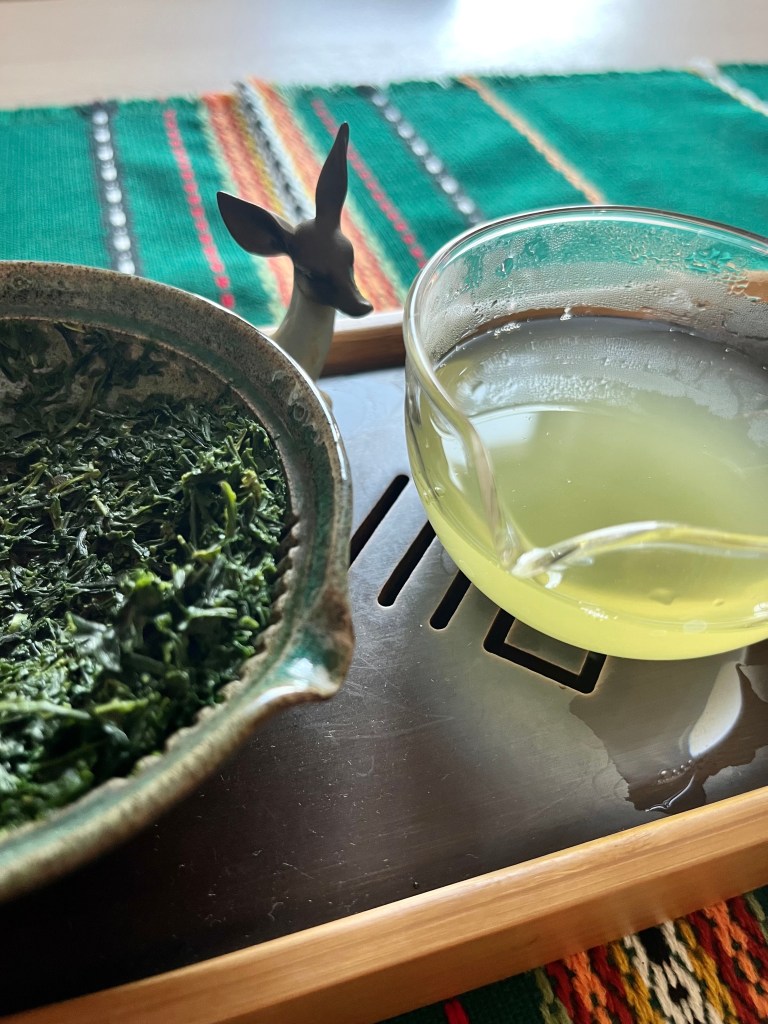


Gyokuro is pretty magical for its versatility as well as flavour. With leaves this soft, you can brew them and then snack on them! Add a little soy sauce, sesame oil, and sesame seeds to the spent leaf and you’ve got yourself an incredibly refreshing little salad.

One thing I have yet to try with this one is koridashi brewing – letting the leaf steep in melting ice. This is super refreshing on hot days, and it’s quite meditative to take time with this. With cold infusions, less astringency is drawn out from the leaf, and you end up with richer, sweeter brews. For a tea like this, that’s already so sweet and rich, it’s going to be a fun experiment in intensity.
Gyokuro is a tea I particularly love to share with folks who aren’t super familiar with tea. Maybe that’s a bit unexpected, as it’s not the most accessible of teas, especially to many Western palates. But gyokuro tends to really challenge people’s perceptions of what tea is and what it can be – drinking gyokuro is an opportunity for learning, unlearning, and taking time to experience something entirely new.
Last time I visited home, I brewed my parents their first gyokuro – I figured my mum should have an idea of what she’d sent me. My dad’s getting well within tea nerd territory himself now, and my mum will usually try a sip or two even if she doesn’t stick around for the full session. It was a hit with both of them – that mindboggling first taste, when they didn’t yet realise what they were in for, through four intense infusions, of which my mum tried every one.
 Tea with Maren
Leave a comment